Subtotal $0.00




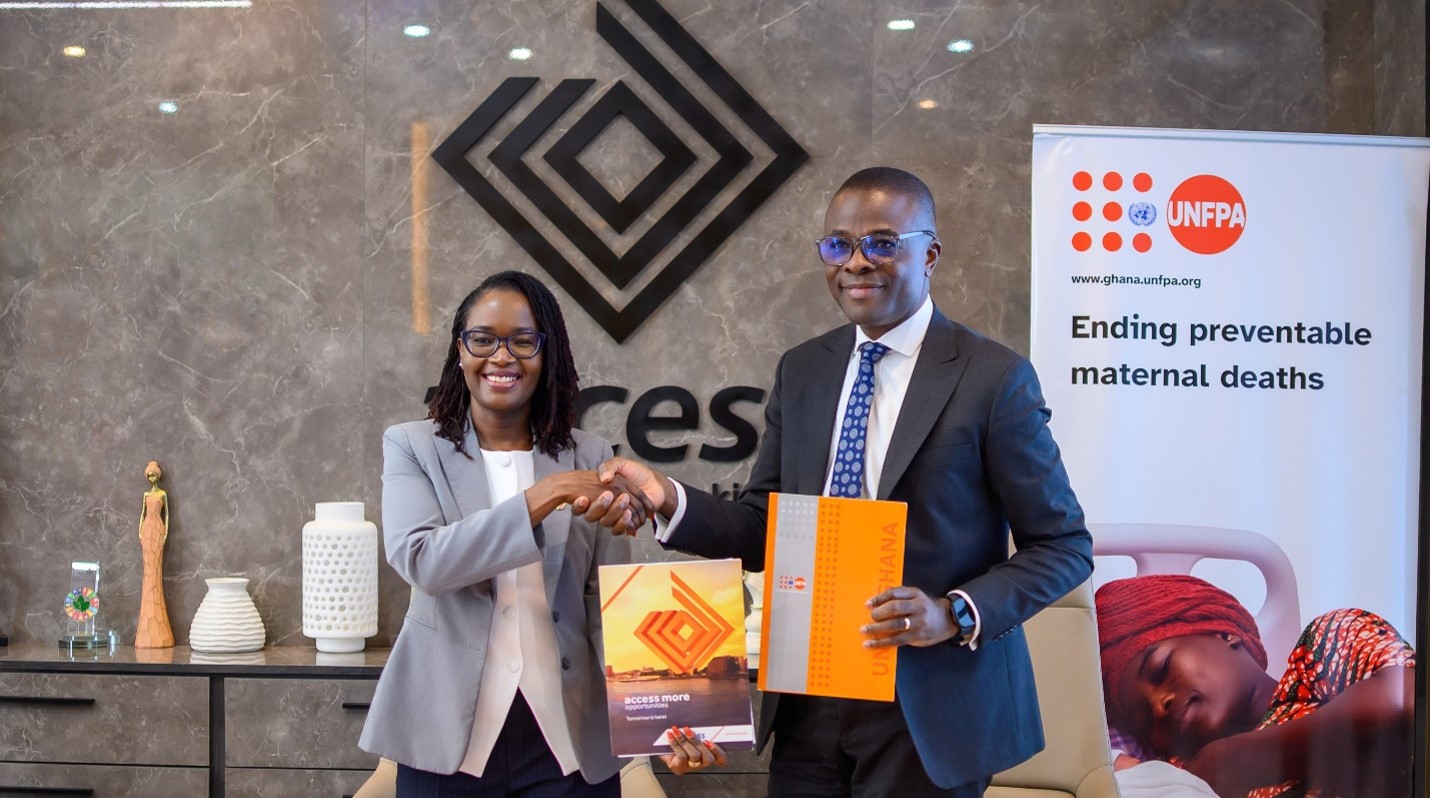
– Access Bank (Ghana) Plc has signed a Memorandum of Understanding (MoU) with the United Nations Population Fund (UNFPA) to strengthen collaboration under the Partnership to End Obstetric Fistula in Ghana, reaffirming the Bank’s commitment to improving maternal health and restoring the dignity of women living with the condition.
The agreement marks a milestone in Access Bank Ghana’s long-standing fight against obstetric fistula, reinforcing a shared vision with UNFPA to expand access to life-changing surgeries, increase public awareness, and mobilize sustainable funding to eliminate the condition in Ghana.
From Campaign to Sustainable Institution
Speaking at the signing ceremony on behalf of Pearl Nkrumah, Managing Director of Access Bank Ghana, Eugene Ocansey, Executive Director, Retail and SME Banking, described the partnership as a demonstration of the Bank’s purpose-driven approach to corporate social responsibility.
“This is Access Bank’s commitment in action. Since 2018, we have championed the Fight Against Fistula campaign, working alongside surgeons, nurses, advocates and development partners to restore hope and dignity to women living with obstetric fistula,” he said. “Today, we are transitioning from a campaign into a sustainable institution through the establishment of the Fistula Trust Fund.”
The Fistula Trust Fund provides a transparent, structured platform that enables individuals, institutions and corporate organizations to contribute towards corrective surgeries and rehabilitation for women affected by obstetric fistula. Ocansey acknowledged UNFPA’s technical leadership on obstetric fistula and the contributions of founding partners, including Mercy Women’s Catholic Hospital, and the Kaysens Group, whose collective efforts have strengthened Ghana’s national response to the condition.
To democratize giving, Access Bank Ghana has also partnered with the Chango App, enabling Ghanaians in Accra and Sunyani to donate to the Fistula Trust Fund via the short code *887*5727#, allowing anyone to contribute regardless of the amount. To date, the initiative has supported more than 250 successful corrective surgeries, each one representing what the Bank considers its most meaningful measure of impact.
A National Push to End Obstetric Fistula By 2030
Dr. Emmily Naphambo, Deputy Representative of UNFPA Ghana, commended Access Bank Ghana for renewing its commitment to the cause, emphasizing that collaboration between government, development partners and the private sector remains critical to ending obstetric fistula in Ghana. She noted that obstetric fistula is a childbirth-related injury whose effects extend beyond physical health to a woman’s dignity, livelihood and social inclusion, and that many affected women continue to suffer in silence, facing stigma, isolation and economic hardship.
“For every woman whose fistula is successfully repaired, we restore not only her health but also her dignity, productivity and place within her family and community. Human capital development cannot be achieved if vulnerable women are left behind,” Dr. Naphambo said.
She added that the partnership aims to repair approximately 2499 fistula cases annually, with a target to clear a backlog case of 7,130 with the goal eliminating obstetric fistula by 2030, while working toward making fistula repair services routinely available across health facilities rather than relying solely on surgical outreach camps.
A Commitment to Women’s Health and Inclusive Development
The renewed partnership underscores Access Bank Ghana’s broader commitment to sustainable development, women’s health and inclusive national development, and reflects the collective effort required to eliminate obstetric fistula and restore hope to affected women across the country.
The signing ceremony brought together senior executives from Access Bank Ghana and officials from UNFPA. Representing Access Bank Ghana were Eric Amponsah Frempong, Head of Marketing and Communications; Kofi Oppong, Head of Risk Management; Mariama Aminu, Team Member, Risk Management; and Roselind Akko, Head of Women Banking and Emerging Business. The UNFPA delegation included Dr. Emmily Naphambo, Deputy Representative; Dela Bright Gle, Programme Specialist; and Dr. Adzi Kofi Gudugbe, Programme Analyst



Comments are closed