Subtotal $0.00


Artificial intelligence is no longer a conversation about the future. For young professionals in Ghana, it is a present challenge: learn to work with it, or risk being replaced by someone who has.
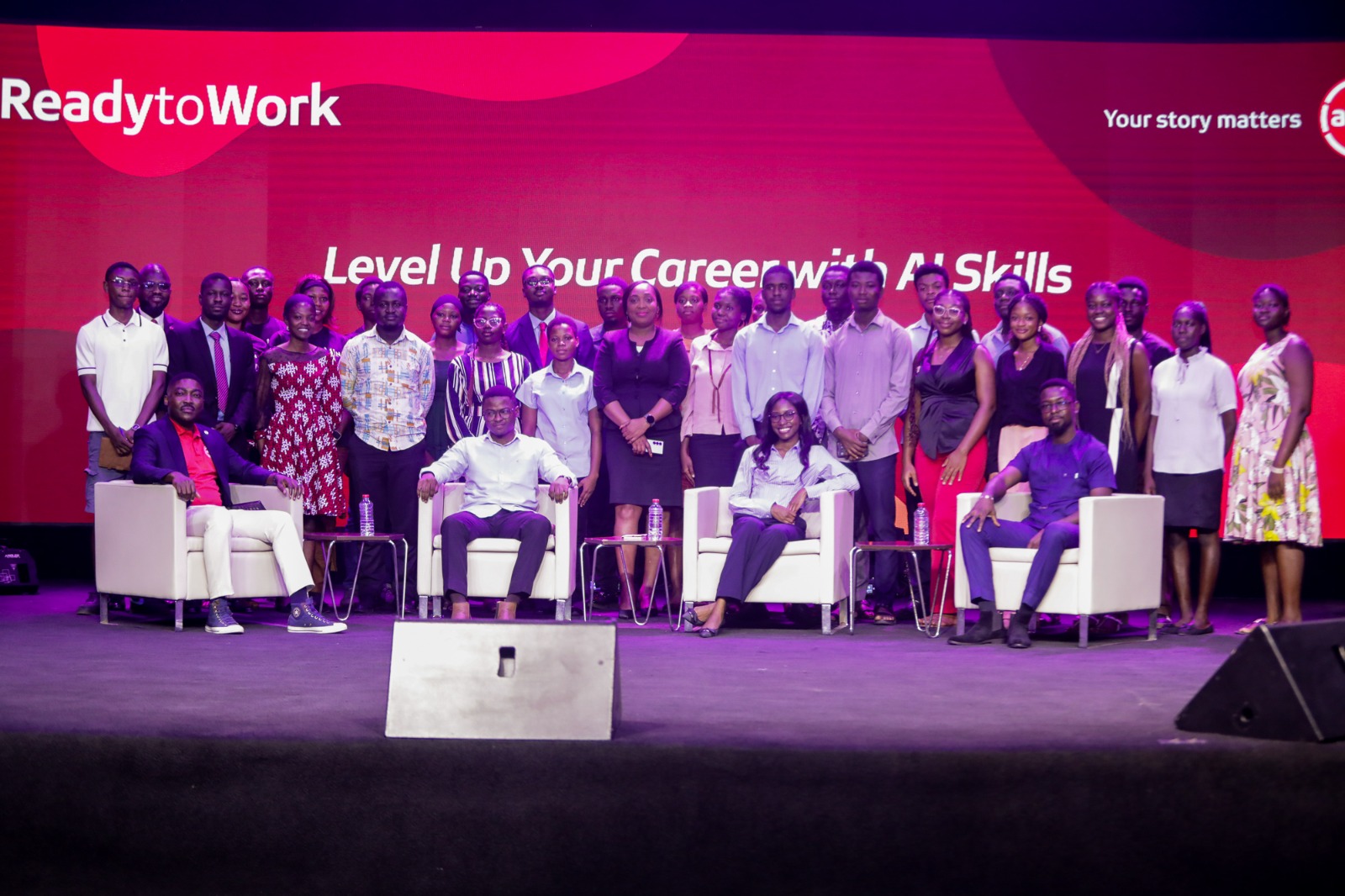
That was the central message of a recent webinar organised by Absa Bank Ghana, under its ReadytoWork skills development programme.
The session, themed “Level Up Your Career with AI Skills,” brought together three practitioners to examine what AI competence actually looks like, where the risks lie, and what young Ghanaian professionals should be doing about it now.
The new measure of productivity
Speaking on productivity, Jeremiah Amlanu, a Software Engineer and Tech Innovation Lead at Techies for Impact, did not mince words: “One person who knows the job can now employ AI to do the work of five to 10 different people,” he said. “If you know how to work with AI, you can actually expand your productivity, and that makes you very valuable to the marketplace.”
The implication is straightforward. Employers are beginning to measure output differently. A junior professional who can use AI tools effectively may outperform a more experienced colleague who cannot. That shift in the productivity equation is already reshaping hiring decisions, even if most job descriptions have not caught up yet.
Artificial Intelligence is more than coding
A common misconception is that AI skills mean programming skills. Nicole Nanka-Bruce, Founder of Belmont Solutions and an AI Practitioner and Scholar, pushed back against that assumption. AI literacy, she argued, is broader than technical ability. It includes knowing which AI tool to use for a given task, understanding how to frame a prompt effectively, and recognising when a tool’s output needs human judgment.
“AI is really more than just coding,” she said. “It also leans into literacy: knowing which AI to use for a task, how to use it, and when to use it.”
However, she also issued a warning that the convenience of AI creates a real danger of intellectual dependency. “The biggest mistake I see is when young people completely outsource their thinking instead of outsourcing their tasks,” she stressed. “AI is supposed to be a supplement; it is not necessarily supposed to be a wheelchair that you sit in for someone else to push you.”
A framework for responsible AI use
Alexander Kobina Nsiah, Technical Product Lead at Absa Bank Ghana, offered a practical structure for navigating the balance between speed and judgment. He introduced what he described as a “3D framework” for working with AI: draft, diagnose, and decide.
The principle is simple: use AI to produce a first draft or accelerate a process, then diagnose the output for accuracy and relevance, and finally apply human judgment to make the decision. The framework acknowledges that AI is a powerful accelerator whilst insisting that the person using it remains accountable for the result.
“Truthfully, it is both,” he said of the threat-versus-opportunity debate. “You transition from being the one that is actually doing the task to the one that is supervising an AI to do the task.”
That distinction reframes the relationship between a young professional and AI from one of replacement to one of oversight, a shift that demands more critical thinking, not less.
How to start developing AI skills
The panellists were asked to leave the audience with specific, actionable steps. Three recommendations stood out.
First, learn to prompt. The quality of what AI produces depends almost entirely on the quality of the instruction it receives. Prompting is a skill, and it improves with deliberate practice.
Second, pick one AI platform and learn it properly. Rather than dabbling across several tools superficially, young professionals were encouraged to choose one, whether ChatGPT, Claude, Gemini, or another, and develop a working fluency through consistent, iterative use.
Third, stay critical. AI is fast, confident, and sometimes wrong. The professionals who will thrive are those who treat AI output as a starting point, not a finished product.
The session clarified that AI competence is no longer optional for young professionals entering Ghana’s job market. The tools are accessible, but the question is whether young people will engage with them strategically.
About Absa ReadytoWork
The webinar is part of ReadytoWork, Absa’s educational and skills development programme designed to equip young people with the knowledge and capabilities needed to transition seamlessly from education into the world of work. It offers a range of online learning modules covering essential areas such as work skills, people skills, money skills, entrepreneurship, and creative thinking.
Beyond the fundamentals, ReadytoWork also provides advanced training in emerging and high-demand fields, including digital literacy, blockchain technologies, the gig economy, project management, and computational thinking.
ENDS






Comments are closed