Subtotal $0.00




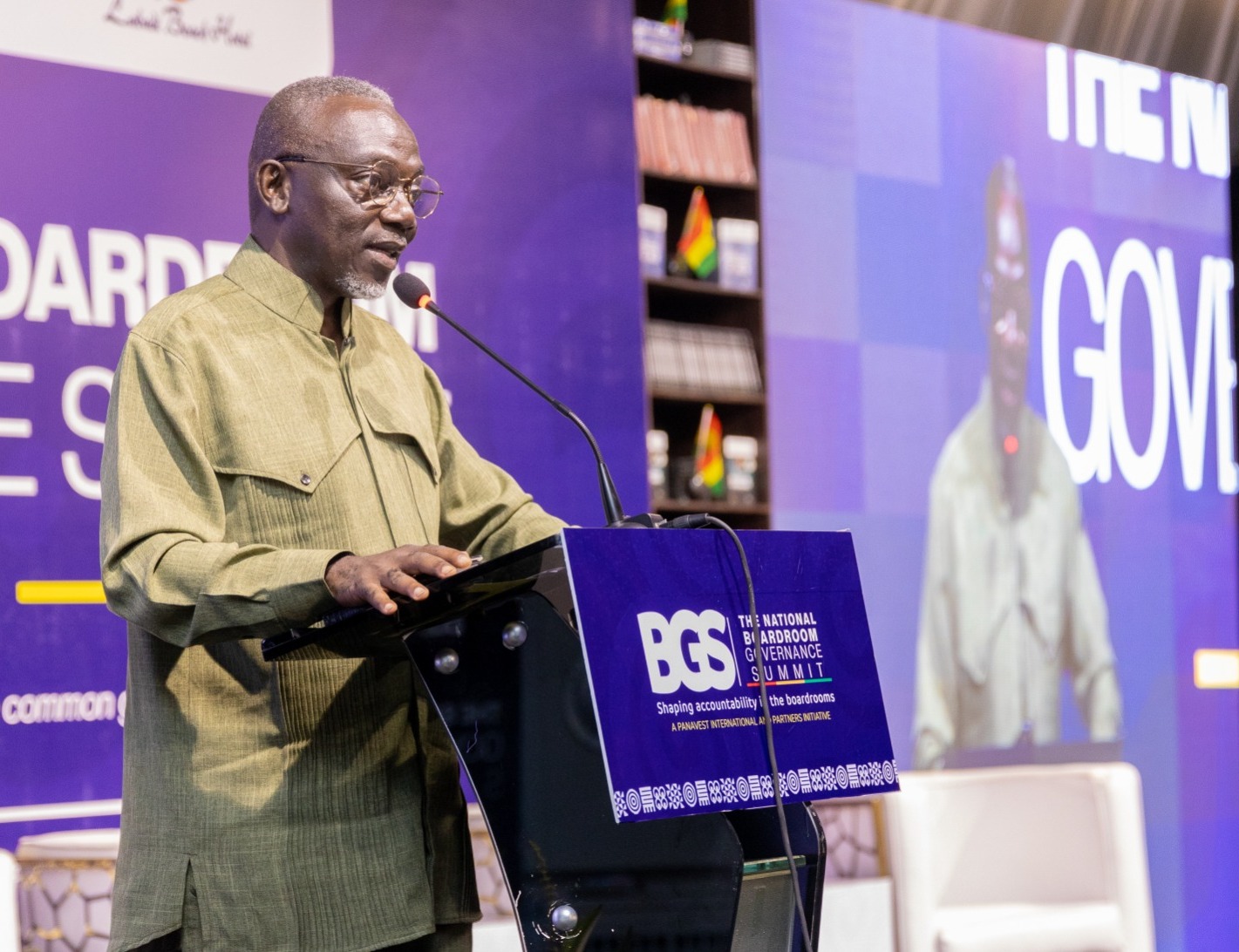
The role of board committees in corporate success and failure will be the focus of this year’s Boardroom Governance Summit, scheduled for Wednesday, October 7, 2026, at the Labadi Beach Hotel in Accra.
The summit is convened by Professor Douglas Boateng and PanAvest International is under the theme “Board Committees: From Oversight to Impact. The Conversations Every Board Must Have.” It will devote a full day to the committee structures where much of a board’s work is carried out.
In three years, the summit has grown into one of the largest boardroom-focused gatherings on the continent. It draws an average of about 1,000 executives, chairpersons and policymakers each year.
Confirmed speakers include the Chief of Staff to the President of Ghana, Dr. Julius Debrah; the Board Chairman of Ecobank PLC, Chief Alhassan Andani; the Board Chairman of Guinness Ghana Breweries PLC, Mr. Felix E. Addo; and the President and Chairman of the Chartered Institute of Directors (CIoD) Nigeria, Otunba Adetunji. Other corporate and public-sector leaders will also speak.
According to the organisers, board committees sit behind almost every corporate success and almost every corporate failure. Audit committees are where financial irregularities are either caught or missed. Risk committees are where threats are either anticipated or ignored. Nomination and remuneration committees determine whether the right leaders are chosen and fairly rewarded. Despite this, committees remain among the least examined parts of boardroom governance.
A full board meets only a handful of times a year and cannot examine every issue in depth. Committees are meant to fill that gap. They give directors time to interrogate the numbers, test assumptions and follow up on issues. They also bring directors with the right skills to focus on audit, risk, people, technology and sustainability. In addition, they give non-executive directors a space to challenge management frankly, away from the pressure of the main board meeting. Finally, they give the board first sight of risks, weaknesses and red flags before these become crises.
The organisers note that when committees work, the board makes sharper decisions and holds management to account. When they are weak, captured or ceremonial, however, they become a blind spot through which failure enters. From global corporate collapses to Ghana’s recent financial sector clean-up, post-mortems have repeatedly pointed to oversight that existed on paper but not in practice.
Regulators are increasingly requiring committee structures, and investors are examining them closely. As a result, the organisers say, the question is no longer whether an organisation has committees, but whether those committees make any difference.
Professor Boateng said committees must now be judged by their impact.
“Board committees are the engine room of governance. The full board sets direction, but it is the committees that do the detailed work that makes good decisions possible. Their effectiveness should not be measured by the number of meetings held or reports submitted, but by whether they help the board anticipate risks, challenge assumptions and create lasting value,” he said.
“Too many organisations discover the weakness of their committees only after a crisis. This summit is about having those conversations before the crisis arrives,” he added.
Sessions will examine how audit and risk committees can look ahead as well as back. They will also cover the quality of engagement between committees, the full board and management, and independent challenge and the courage to ask hard questions. Other sessions will address succession and leadership, including the role of nomination and remuneration committees; ESG and sustainability oversight; and how committees keep boards alert to emerging opportunities and threats.
Professor Boateng’s new book, Practical Perspectives on the Committees of the Board, will be launched at the summit, and every delegate will receive a copy. The book is written from an African and developing-world perspective.
Participation is claimable as Continuing Professional Development (CPD) for members of partner professional bodies. These include ICAG, GBA, GhIE, GIPS, CILT and GhIS.
The summit is targeted at committee chairs and members, chairpersons, directors and chief executives, company secretaries and governance professionals, investors and regulators as well as leaders of state-owned enterprises.
Registration and further details are available at www.boardroomgovsummit.com.
Comments are closed