Subtotal $0.00




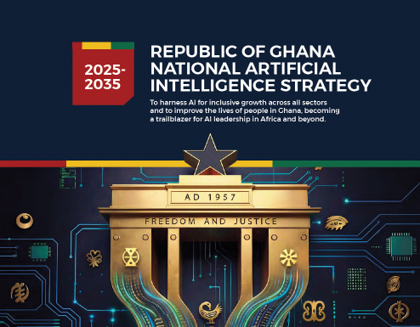
Ghana wants artificial intelligence to become a new engine of economic growth, with its National Artificial Intelligence Strategy targeting applications across healthcare, agriculture, education, public services and industry.
But one of the biggest obstacles to that ambition is not necessarily a shortage of algorithms, computing power or data.
It is something much more physical: fibre cables being repeatedly cut across the country.
Fibre networks form the backbone of the digital economy. They connect businesses, government institutions, mobile networks, data centres and international gateways. When those networks are damaged, the consequences can extend well beyond a temporary telecommunications outage.
Businesses can lose connectivity. Mobile-money services can be disrupted. Government platforms can become inaccessible. Schools and hospitals can be affected. As more services incorporate artificial intelligence, those systems will increasingly depend on the same underlying networks.
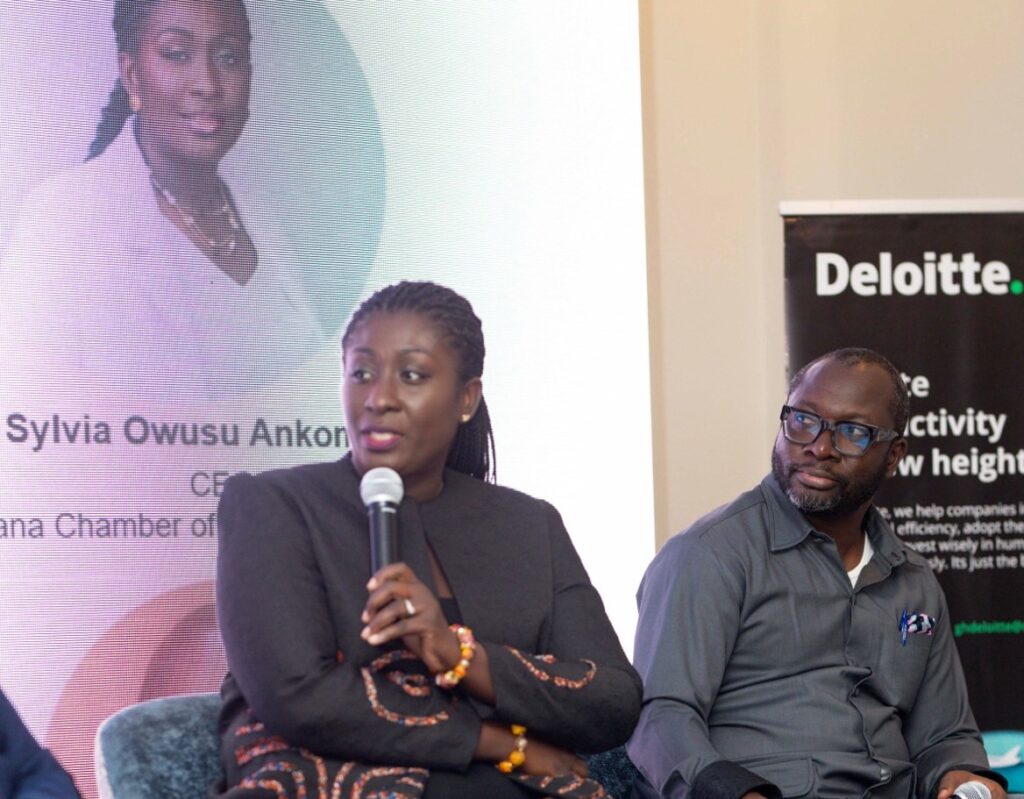
“AI does not replace infrastructure, it depends on it,” Sylvia Owusu-Ankomah, CEO of the Ghana Chamber of Telecommunications, said recently at a Conversations with Equinix forum.
That infrastructure is under growing pressure.
Between 2021 and 2025, telecommunications operators recorded thousands of fibre cuts annually. Incidents rose from 3,900 cuts in 2021, costing about US$7.5 million in repairs, to 10,034 cuts in 2022, costing US$17.4 million.
Although the number fell to 6,344 cuts in 2023 and 5,600 in 2024, cuts exceeded 8,000 in 2025, with direct repair costs reaching approximately US$20 million. And the problem persists. Industry data for the first half of 2026 indicates that reported cuts have already reached 4,289, putting the annual total on pace to exceed 8,000 if no drastic intervention is made to address these fibre cut incidents.
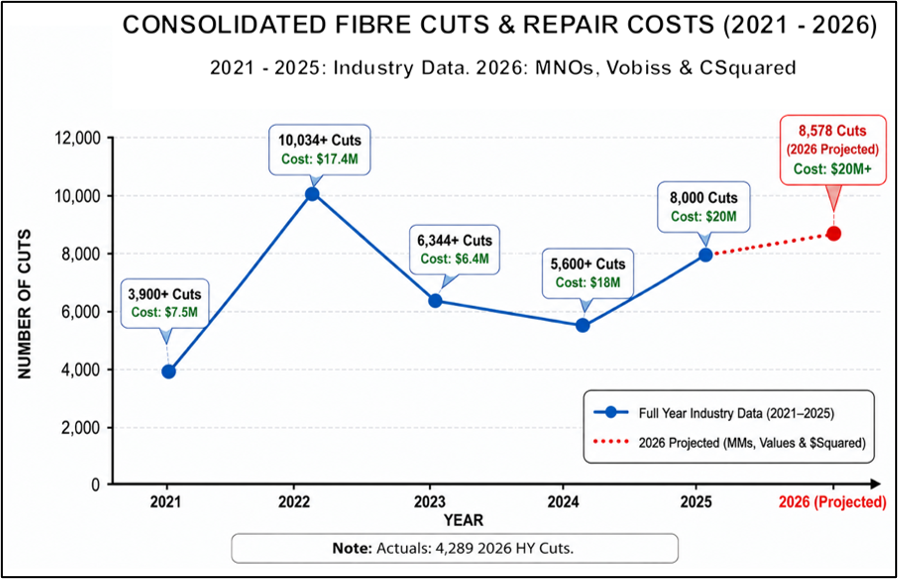
(Source: Consolidated GCT Monthly Fibre Cuts Data)
Across the five years (2021 – 2025), operators spent more than $69 million repairing damaged fibre.
That is money that could otherwise have supported network expansion, improved service quality, increased data-centre capacity or helped finance the infrastructure required for Ghana’s AI ambitions.
The problem is particularly pressing as Ghana expands its physical infrastructure.
Road construction involves excavation, drainage and utility relocation, precisely the activities that can damage buried telecommunications networks when projects are not properly coordinated. Aerial fibre mounted on poles is also vulnerable to construction activity.
The telecommunications industry is not arguing against road development. It is arguing that physical and digital infrastructure need to be planned together.
That means knowing where existing fibre is located before excavation begins, engaging network operators and relevant coordinating institutions, and designing future infrastructure to accommodate digital networks.
The proposed Dig Once Policy approach offers one potential solution. Under the proposal, empty fibre ducts and other digital infrastructure would be incorporated into the design of new roads and major rehabilitation projects.
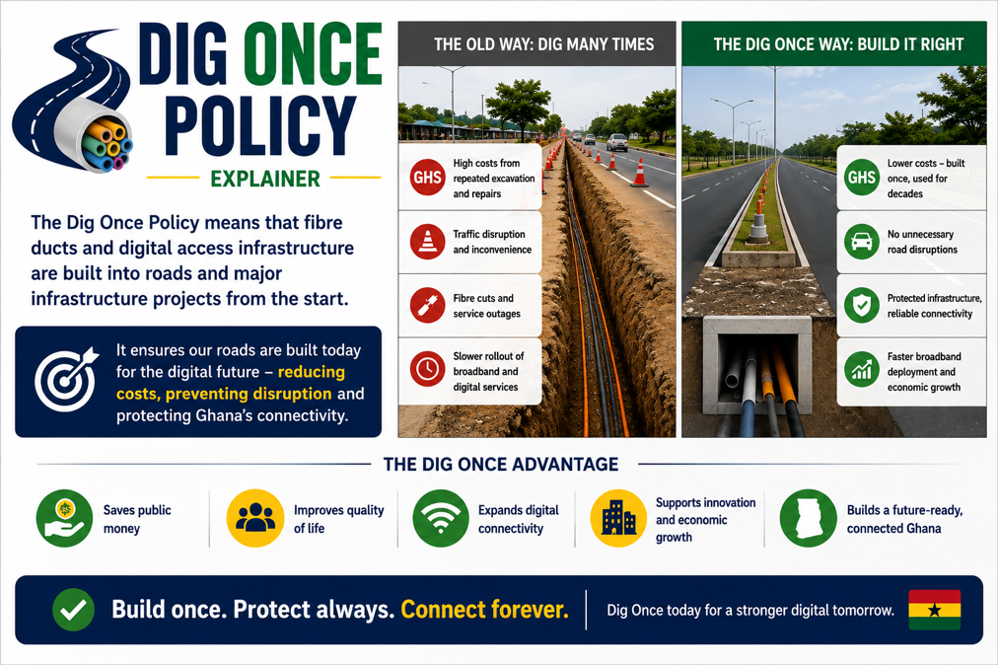
The logic is simple: build the road once, and prepare it for the digital infrastructure the economy will need tomorrow.
Ghana’s AI strategy allows the country to position itself in the global digital economy. But policy ambition alone cannot deliver that future.
AI needs data centres, cloud infrastructure, electricity, international connectivity, and resilient communications networks.
The choice, therefore, should not be between roads and fibre.
Ghana needs both.
And protecting the infrastructure already in the ground may prove just as important as building what comes next.
Source: GCT News Desk


Comments are closed